


ADN Anti-Drone Net - Group 2
Add to quote to receive your pricing and lead times.
Product Code: NP-ADN-G2
Availability:
Made to order
Estimated lead time:
Provided with your quote
Quote response:
Within 1 business day
The ADN Anti-Drone Net - Group 2 is a passive physical C-UAS barrier designed to stop, entangle and contain Group 1 and Group 2 drones, including FPV drones and loitering munitions with limited payloads. Its heavy-duty single-layer net is the right choice for the weight classes of both groups.
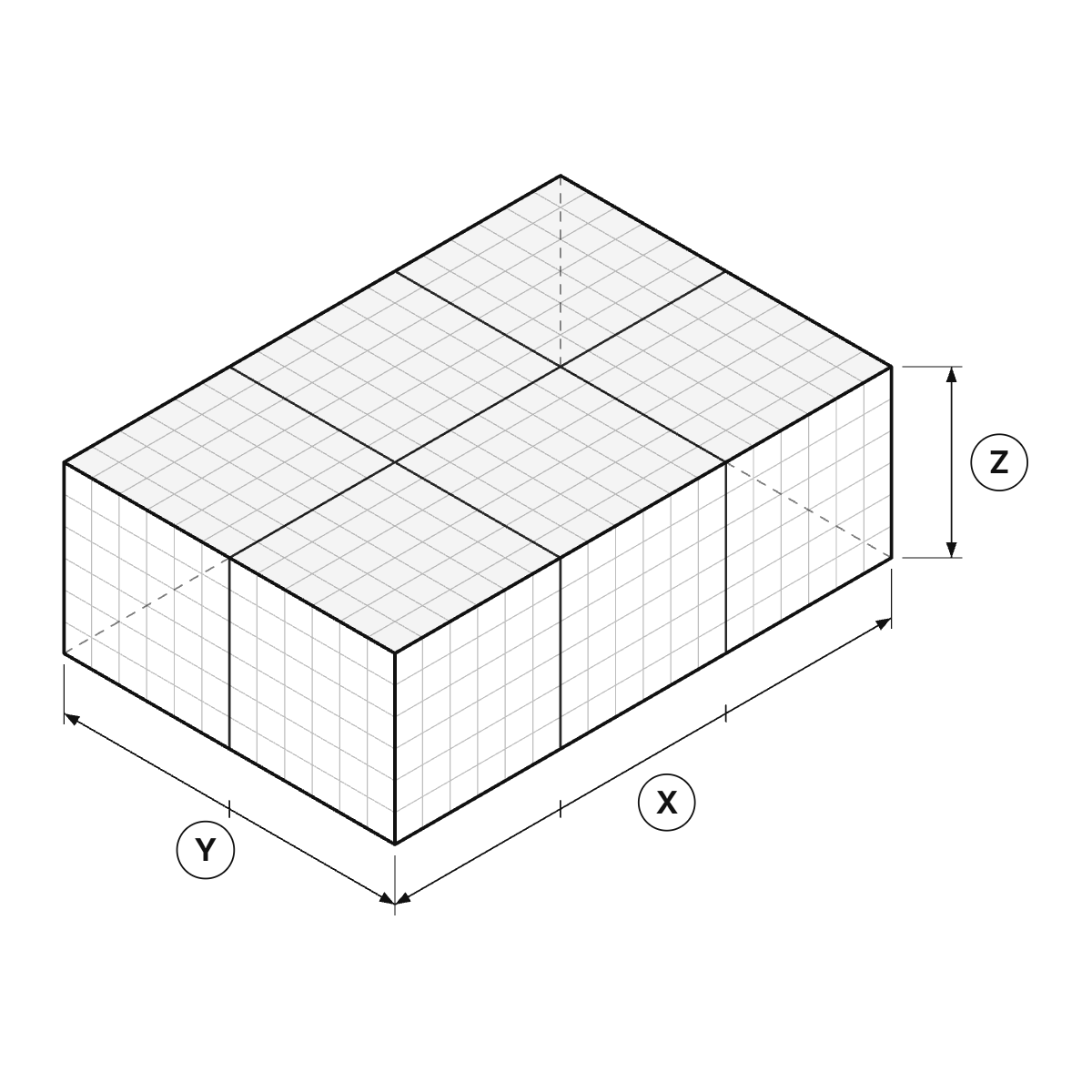
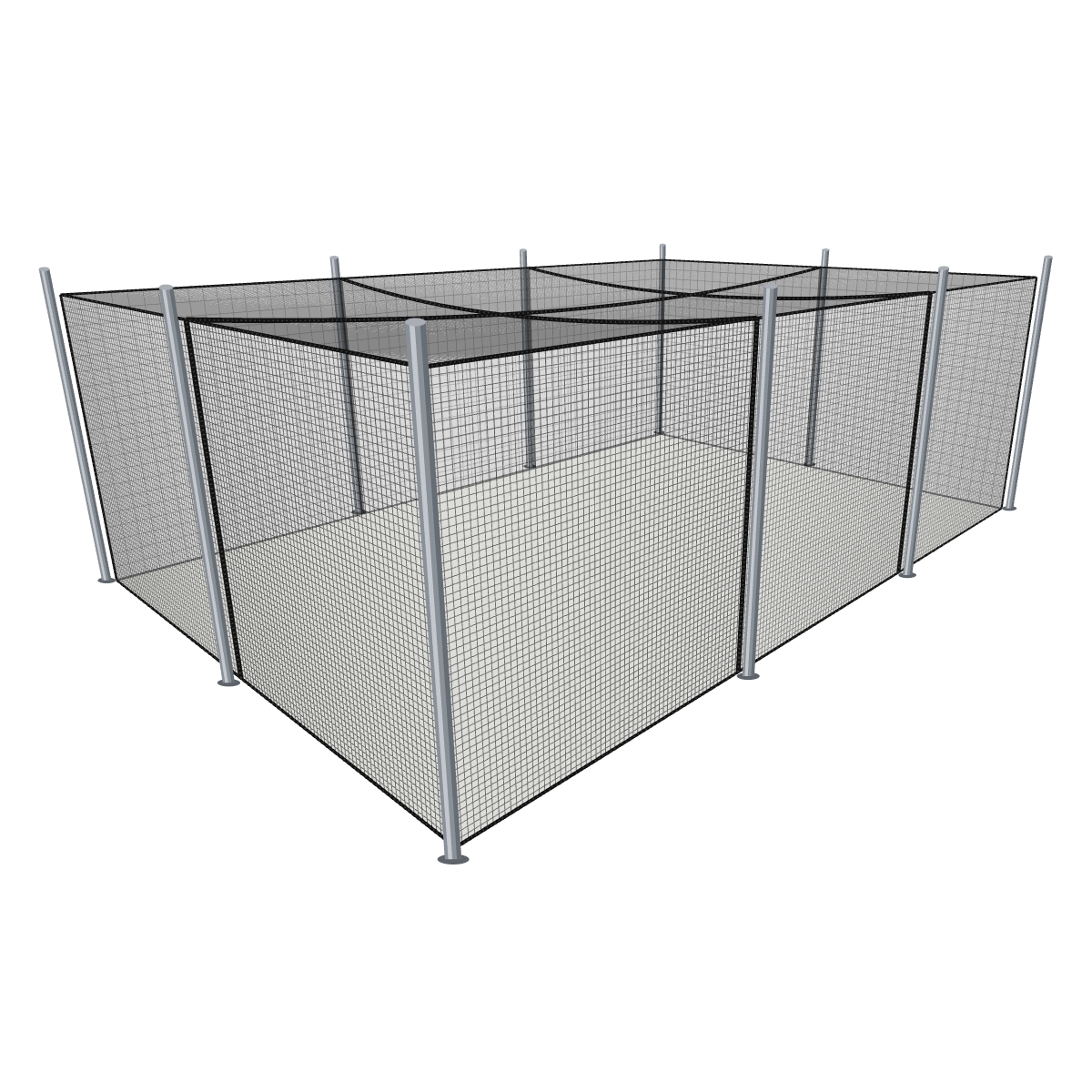
The net is supplied in panels of 20 ft × 20 ft (6.1 m × 6.1 m), each finished with a rope border. The panels are joined on site by continuous hand lacing along every edge, with the lacing cord supplied, to cover larger areas or to form an enclosure with a roof and four sides.
The ADN Group 2 net is the second of three configurations in the Barry ADN range. It builds on Barry’s decades of expertise in controlled mass deceleration and engineered netting.
Applications
- Parking areas and outdoor storage of static equipment, civil and military
- Static civil infrastructure in the energy, industrial and petroleum sectors
- Strategic roads
- Military bases, forward operating positions and tactical perimeters
- Close-in protection as the inner layer of a counter-UAS defence
- Communication centres, airports, helipads and logistics platforms
- Border protection zones
- Civil and military drone pilot training and test enclosures
Key Features
- Configuration: Heavy-duty single-layer net, for physical arrest with rotor and propeller entanglement
- Target: Group 1 and Group 2 UAS, including FPV drones and loitering munitions with limited payloads
- Format: Panels of 20 ft × 20 ft (6.1 m × 6.1 m) that join together
- Finishing: Rope border on every panel
- Assembly: Continuous hand lacing on all sides, lacing cord supplied
- Panels: Modular, individually replaceable
- Materials: Fire- and weather-resistant, non-metallic and non-conductive
- Detailed technical data: Provided with the quote
Design Basis
The ADN Group 2 net is designed to engage UAS with limited payloads at low altitude and short range. It is not designed for higher-energy threats such as one-way attack UAS, as such threats are covered by the third configuration in the Barry ADN range.
Performance and Limitations
Barry anti-drone nets are designed to reduce the risk from specified drone threats. Performance depends on the threat, installation, supporting structure, and net condition; test results apply only to the configurations tested. The nets are intended as one layer of a broader protection system.
Scope of Supply
Barry supplies the net panels and the lacing cord that joins them. The supporting structure, steel cables and anchoring systems are sourced locally by the customer.
Options and Services
- Optional test swatches, for periodic verification of the net’s residual strength
- Residual strength testing, annually or according to the customer’s operating procedures
- Training on use and inspection
- Panel layouts prepared from the drawings and specifications of the design engineers
- Technical specifications for installation tenders, on request
- Replacement panels available at any time and delivered quickly, for fast and simple repairs
- Repair kits that are easy to use in the field
How to Order
Select the length (X), width (Y) and height (Z) of the enclosure from the fixed dimensions offered, then add it to your quote cart. You will receive your pricing and lead time.
If the dimensions offered do not give enough space, Barry can build larger made-to-measure systems. Above 1,000 lb of netting, pricing is not calculated automatically: request a custom quote and Barry will provide the details specific to your project.

Downloads
Frequently Asked Questions
What is an anti-drone net?
An anti-drone net is a physical barrier installed around or above an area, either to keep drones from reaching it or to contain drones flown inside it for pilot training and testing. Its protection is passive: it depends on no power supply, detection or jamming, and it works regardless of how the drone is guided, by radio or by fibre optic. The ADN Anti-Drone Net - Group 2 complements electronic counter-drone systems as a close-in physical barrier.
What are Group 1 and Group 2 drones?
In the U.S. UAS classification, Group 1 covers drones weighing 20 lb (9 kg) or less, and Group 2 covers drones weighing 21 to 55 lb (9.5 to 25 kg). The ADN Anti-Drone Net - Group 2 is the right choice for both weight classes. Net performance by drone mass and speed is specified with the quote.
How does it differ from the ADN Group 1 net?
Both are single-layer nets. The Group 1 net is intended for small drones and is built as a made-to-measure enclosure. The Group 2 net is a heavier-duty net that covers Group 1 and Group 2 drones, supplied in 20 ft × 20 ft panels that are joined together.
How are the panels joined and installed?
The panels are laced together on site, then hung from a supporting structure: a building for indoor installations, or posts of sufficient height. The nets are usually attached to steel cables around their perimeter, with additional or vertical cables where needed, and can be anchored to the ground. A post-mounted enclosure uses at least four posts, one at each corner, and can be fitted with hoisting cables to raise and lower it.
How can net deflection be reduced?
Deflection is reduced by tensioning the nets along their perimeter or by adding support cables. Barry can advise on the arrangement suited to the structure.
How many panels are needed?
Each panel covers 20 ft × 20 ft (6.1 m × 6.1 m). The number of panels depends on the area to protect, plus a standoff distance between the net and the asset.
What is the net made of?
The net, its border and the lacing cord are made of high-strength synthetic fibres. They contain no metal, are non-conductive and generate no radio-frequency interference (RFI). They are fire-resistant and weather-resistant.
Why is detailed technical data not published?
For operational security reasons, the detailed data sheet is provided to qualified customers with their quote.
Who is responsible for training and for choosing suitable products?
The Buyer is responsible for making sure that users are trained in the correct application and use of products purchased from Barry, and that any combination of Barry products is fit for purpose and appropriate for the intended use. These goods may be dangerous to human safety, may result in injury or death and may damage property if not used properly.
Need help choosing the right product?
Our experts are here to help.


