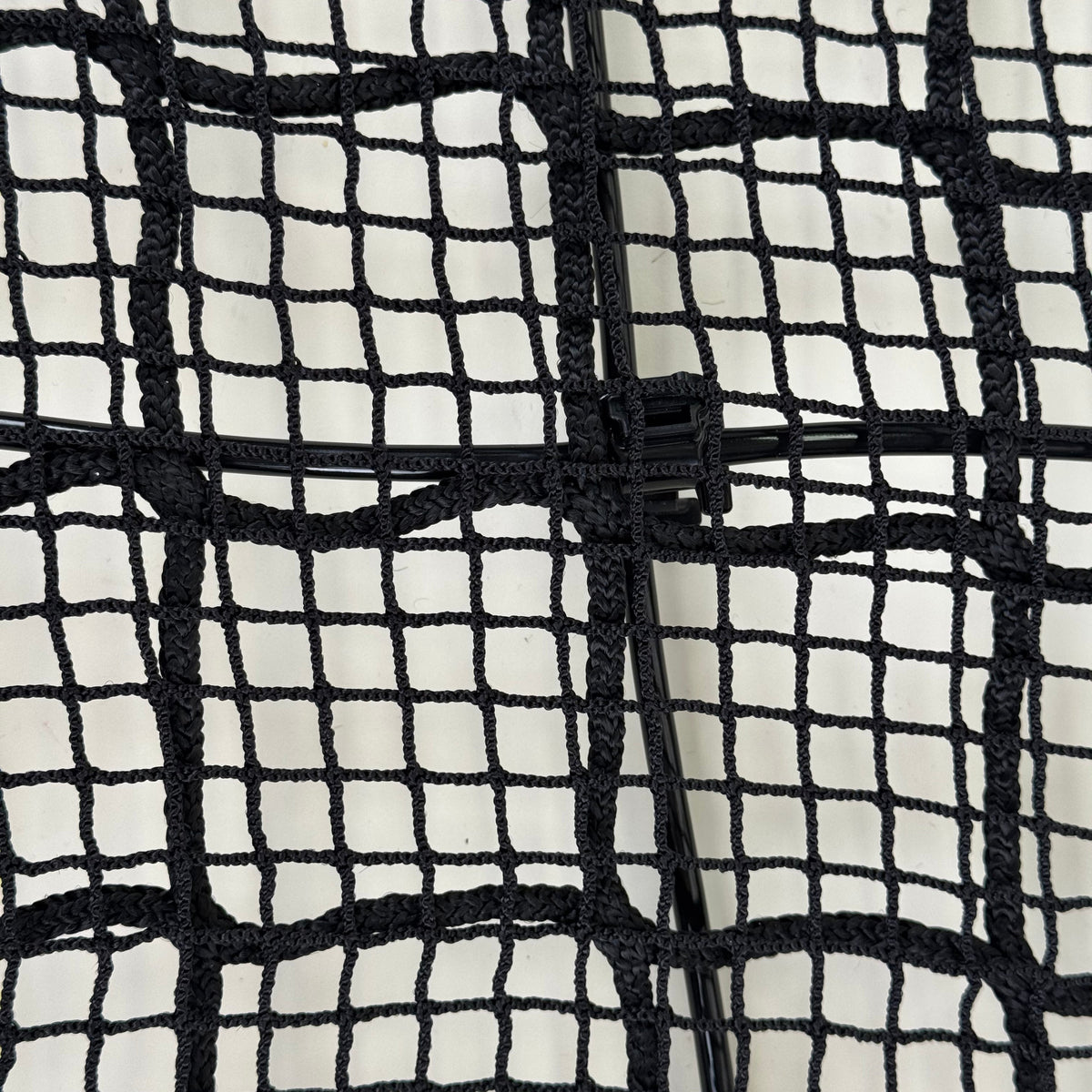
Barry Anti-Drone Netting (ADN) and Barry Loitering Munition Arrest Net Systems (LMANS) are engineered C-UAS barrier systems designed as physical last line of defense to stop, deflect, or neutralize unmanned aerial threats before they reach sensitive areas. Leveraging decades of expertise in controlled mass deceleration and advanced net-based technologies, these systems deliver reliable ground-level protection that complements existing detection and mitigation solutions.
Unlike electronic counter-UAS technologies that rely on detection, jamming, tracking, or operator intervention, Barry ADN and LMANS provide passive protection through a physical barrier that remains in place and operational at all times. These systems are designed to support a layered defense strategy by adding a non-kinetic, always-ready protection layer between the threat and the protected asset.
The systems use multi-layer, high-performance, fire-resistant mesh structures to absorb and dissipate kinetic energy from drones of various sizes, including high-speed or weaponized platforms. Sacrificial layers are added to trap debris, limit fragmentation, and manage blast effects, helping ensure that impact or explosive payload effects are mitigated at a safe standoff distance from personnel, assets, and infrastructure. Mesh dimensions and energy-absorption characteristics are configurable to match specific threat levels.
As passive counter-drone systems, Barry ADN and LMANS can help reduce dependency on power, radio-frequency control, software, or spectrum availability. Their primary role is to physically intercept, entangle, slow down, or disrupt selected UAV and loitering munition threats before impact with the protected zone.
Barry ADN and LMANS systems are lightweight, scalable, and adaptable for installation on land- or water-based structures and vehicles. They integrate easily with existing frames, mounts, or perimeter infrastructure and offer long-term outdoor durability with materials that are flame-resistant, non-conductive, UV-stable, and weather-resistant. Each system can be customized in size, geometry, and mesh configuration to meet operational requirements.
Barry ADN and LMANS are particularly suited for applications where passive drone protection, physical standoff protection, and low-collateral-damage mitigation are required. They can be deployed as part of permanent infrastructure protection, temporary tactical protection, or mission-specific C-UAS defensive layouts.
Applications
- Land and water-based structures and vehicles
- Military bases, forward operating positions & tactical perimeters
- Border protection zones
- Critical infrastructure (power stations, substations, communication hubs)
- Contraband air-drop prevention
- Airports & helipads
- Public areas & logistics platforms
- Other sensitive or restricted sites
- Passive drone protection for high-value assets
- Physical counter-UAS protection for restricted areas
- Layered defense systems requiring a non-kinetic last line of defense
- Protection against selected FPV drones and loitering munition threats
Key Features
- Multi-layer interception system using high-resistance, fire-resistant materials
- Optimized to intercept diverse drone types and kinetic profiles
- Contains debris and fragmentation upon impact
- Engineered to promote premature detonation at safe standoff distances
- Lightweight, modular design suitable for permanent or temporary deployment
- Scalable dimensions and mesh configurations tailored to each environment
- Simple integration with existing structures and overhead frames
- Low-visibility, weather-resistant materials for long-term exposure
- Designed for durability and ease of field repair
- Passive protection system requiring no power, sensors, software, or RF transmission
- Non-kinetic physical barrier designed to complement active C-UAS technologies
- Always-ready protection layer for critical infrastructure and sensitive sites
- Configurable standoff protection based on threat profile, site layout, and operational constraints
Passive Protection Advantages
- Provides continuous physical protection without relying on electronic activation
- Supports layered C-UAS strategies as a passive last line of defense
- Helps mitigate selected drone, FPV, and loitering munition threats at a controlled standoff distance
- Reduces reliance on jamming, detection, or kinetic defeat methods
- Can remain effective in environments where electronic mitigation is limited, restricted, or unavailable
- Designed for low-collateral-damage interception compared with kinetic countermeasures
Technical Notes
- Flame-resistant, non-conductive, UV- and weather-resistant materials
- Unique connection and assembly method for rapid installation and secure performance